

Automation and AI are reshaping manufacturing, with the global smart manufacturing market projected to reach $880.42 billion by 2032. This shift is about more than technology, it’s transforming how products are designed, produced, and delivered.
Canada is in a prime position to lead. With strong government incentives, cutting-edge research, and a workforce built for innovation, we’re making big moves in advanced manufacturing.
But in a world of supply chain shocks, shifting trade policies, and economic uncertainty, even industry giants are being forced to rethink their tried-and-true strategies. Here’s what’s shaping advanced manufacturing in 2025 — and how you can stay ahead of the curve.
1. Smart Factories: AI, Automation & The Rise of Robotics
Imagine a factory where machines seamlessly communicate with each other, sensors gather real-time data to optimize processes, and artificial intelligence predicts maintenance needs before issues arise. This isn’t the future, it’s happening now.
Just look at Magna International. Headquartered in Aurora, Ontario, Magna is one of the world’s largest automotive suppliers, shaping everything from next-gen electric vehicles to advanced driver-assistance systems. But in this fast-moving industry, staying competitive requires more than just innovation—it demands optimizing processes and enhancing efficiencies. That’s why Magna turned to AI. By integrating smart sensors and predictive maintenance systems into its manufacturing processes, Magna slashed maintenance costs by 35% while
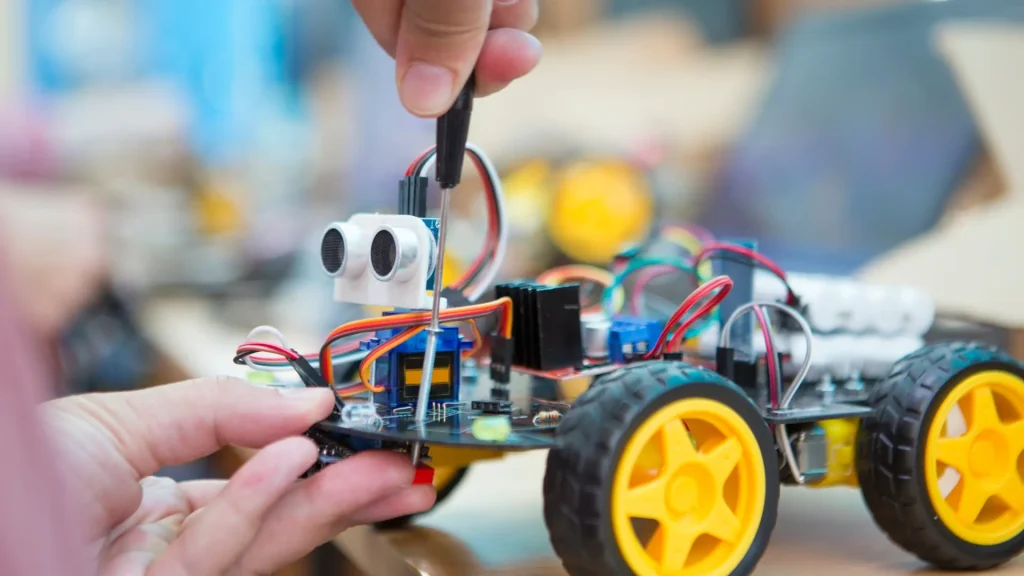
delivering a staggering 287% return on investment in just 18 months. And Magna isn’t alone. A Deloitte survey found that of the 98% of the manufacturers already on their digital transformation journey, 72% are noticing improved efficiency and cost savings too.
The Future of Automation: Human-Machine Collaboration
By 2027, Gartner predicts 75% of companies will have adopted “cyber-physical” technologies, including AI-driven robotics in warehouses and production lines. But the fear that robotics will replace human workers is largely overblown. In reality, the future of automation will be about collaboration. As machines handle repetitive tasks, workers can focus on more meaningful, strategic roles, using their creativity and problem-solving skills to add greater value.
2. Green Manufacturing & the Circular Economy: The Shift to Sustainable Production
Sustainable manufacturing is no longer about meeting regulations. It’s about staying competitive. A Deloitte study found that companies with strong ESG (Environmental, Social, and Governance) consistently outperform competitors. The reason is simple. Reducing waste, cutting energy costs, and improving supply chain efficiency drive real financial returns.
For years, the Canadian government has pushed green initiatives through carbon pricing, tax credits for clean tech, and funding for sustainable manufacturing. But with a federal election on the horizon, the future of these programs remains uncertain. What is clear is that the circular economy is gaining traction. More companies — especially in automotive and consumer electronics — are shifting away from the traditional

“take-make-waste” model. In its place? Processes that focus on reuse, remanufacturing, and recycling.
Take Cyclic Materials as an example. The Kingston-based firm is addressing a major challenge in sustainable manufacturing: recycling critical metals like rare earth elements used in electric vehicles and wind turbines. Last year, the company secured $53 million in Series B funding from BDC Capital’s Climate Tech Fund, Hitachi Ventures, and Microsoft’s Climate Innovation Fund. With much of the investment earmarked for new recycling facilities in the U.S. and Europe, this move highlights a growing demand for sustainable supply chains in advanced manufacturing.
3. Supply Chain Resilience & Nearshoring: The Shift to Localized Manufacturing
Supply chains have been in flux since the COVID-19 pandemic, but in 2025, the pressure is even greater. Recent trade tariffs, rising shipping costs, and geopolitical tensions are making offshore manufacturing less viable. On top of that, labor turnover has caused unexpected delays for 80% of manufacturing professionals — forcing them to rethink how and where they source materials.
KPMG estimates that by 2027, 69% of supply chains serving North America will be locally based, up from 59% today. While Mexico is emerging as a nearshoring hub, many Canadian manufacturers are also bringing production closer to home. But moving production isn’t enough. Companies also need to build more adaptable supply chains and improve operations.
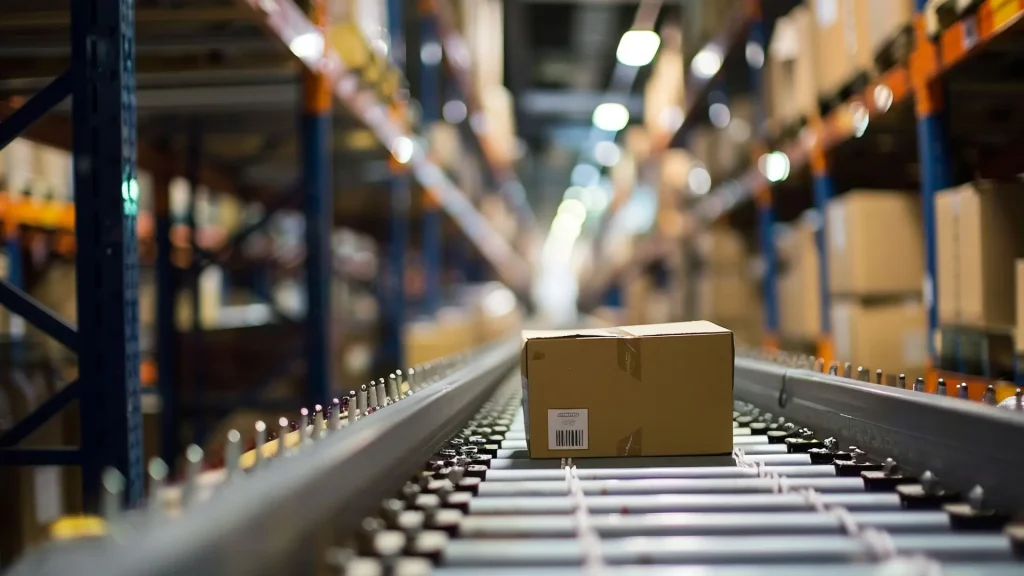
The silver lining? Automation and predictive tools are helping forward-thinking companies do just that. One company leading this transformation is Calgary-based Attabotics. Inspired by ant colonies, its 3D robotic storage and retrieval system reduces warehouse footprints by up to 85%, optimizing space and efficiency. In December 2020, the Government of Canada backed Attabotics with a $34 million investment through the Strategic Innovation Fund.
This is about more than risk management, it’s about long-term stability and growth. The companies that invest in local partnerships, automation, and real-time logistics will have the agility to navigate uncertainty — and outcompete those that don’t.
4. Cybersecurity in Smart Manufacturing: Protecting Data in the Digital Age
For the past three years, manufacturing has been the most targeted industry for cyberattacks, accounting for 25.7% of all incidents — 71% of which involve ransomware.
The reason? Increased connectivity. IoT, AI, and cloud computing have made manufacturing smarter, but also more vulnerable. Without proper safeguards, companies risk data breaches, costly shutdowns, and long-term reputational damage.
Fortunately, Canada is stepping up to help. Rogers Cybersecure Catalyst, a national centre for cybersecurity innovation and collaboration, is equipping Canadian businesses with the tools to secure their operations. Since 2018, it has raised over $56 million to support startups through acceleration programs, applied R&D, and cybersecurity training.
As manufacturing becomes more digital, cybersecurity must be a business imperative, not an afterthought. Those taking proactive steps today will be better positioned to protect operations, minimize disruptions, and maintain trust.
Government Grants and Support for Canadian Manufacturers: How to Get Ahead
For manufacturers looking to tap into funding, local research, and industry support, Canada offers several key programs:
- Innovation, Science and Economic Development Canada (ISED): Supports Canadian manufacturers with funding, research programs, and policies to drive innovation, technology adoption, and global competitiveness.
- National Research Council Canada (NRC): Provides R&D support tailored to manufacturing technologies, commercialization strategies, and industry-specific innovations.
- Accelerated Investment Incentive: Helps manufacturers improve cash flow with enhanced first-year capital cost allowances, including full expensing for machinery, equipment, and clean energy investments.
- NGen (Advanced Manufacturing Cluster): Backed by $427M in funding, NGen supports Canadian manufacturers in adopting advanced tech, securing supply chains, and leading in sustainable manufacturing.
- Scientific Research and Experimental Development (SR&ED) Tax Credit: A 15-35% tax incentive for manufacturers investing in R&D, offered as a tax deduction, credit, or cash refund.
- Strategic Innovation Fund (SIF): Supports large-scale manufacturing investments in digital transformation, sustainability, and productivity enhancements.
- Ontario Advanced Manufacturing and Innovation Competitiveness Stream: Financial support for Ontario-based manufacturers looking to create jobs, attract investment, and accelerate growth.
The Future of Advanced Manufacturing in Canada
Global politics, economic shifts, and rapid technological advancements have made traditional manufacturing processes less profitable — and the pressure to evolve is undeniable.
Fortunately, Canadian businesses are not facing this transformation alone. With access to government incentives, cutting-edge technology, and industry support, there’s a real opportunity to stay ahead. For those looking to scale in Ontario, BHive’s new program Brampton NEXT is just for you. From securing funding to navigating regulatory challenges and building a network, our program are here to help you grow.
The future belongs to those who embrace change today — and we can help.