Starting a business sounds exciting when you say it out loud. You have an idea, you build it, and over time, it grows.
But anyone who’s actually done it knows it doesn’t unfold that neatly.
For many female founders in Canada, building a business isn’t just about the idea. It’s about everything that sits around it. The expectations, the responsibilities, and the pressure to make something work while still showing up in every other part of life.
At the same time, more female founders in Canada are stepping into entrepreneurship than ever before. Women now own close to 1 in 5 businesses across the country, which is a meaningful shift. But while representation is improving, access still hasn’t caught up. Women-led startups continue to receive less than 4% of venture capital funding in Canada, which means many founders are building with fewer resources and more barriers from the start.
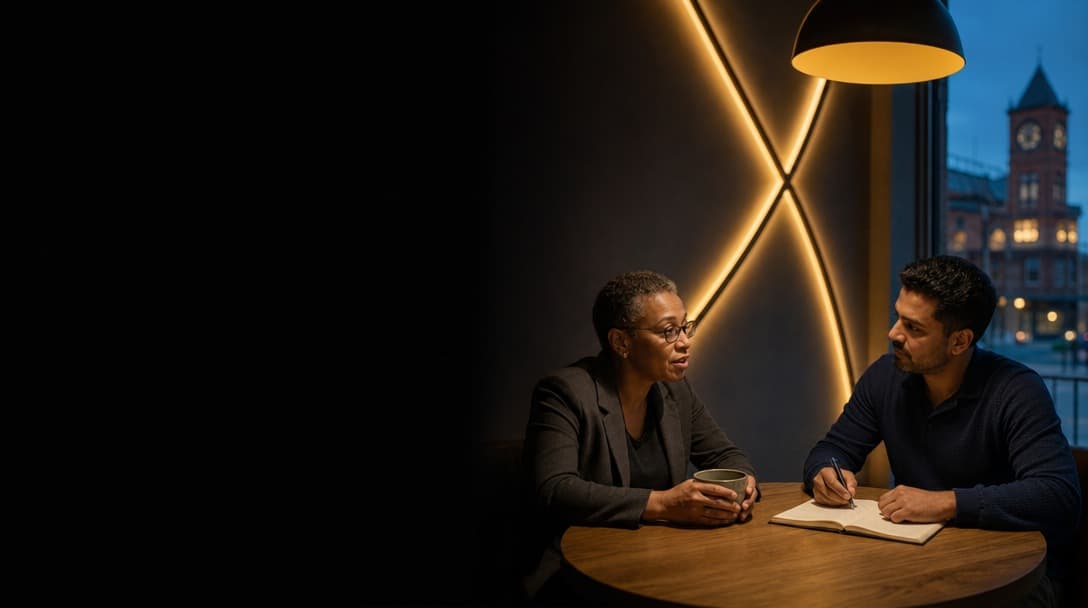
Still, they build.We recently sat down with our own founders to talk about their journeys, experiences, and advice.
You think you’re the only one — but you’re not
For a lot of founders, the hardest parts of building a business feel personal. For Andaleeb Khan, founder of CareO Tech Inc., that shows up in how the work follows her beyond the business itself. Her platform connects seniors with caregivers through personalized care plans, helping families navigate a system that often feels overwhelming.
“It’s a worldwide problem, but it’s a crisis in Canada,” she said.
But the work doesn’t stop when the laptop closes.
“I think [about it] all the time. And it’s not only professional [pressures, it’s] even in your personal life,” she says. “As a mother, as a wife, there’s a pressure on women in general.”
At first, that kind of pressure can feel like something you’re carrying on your own.
But it’s not. On average, women in Canada still take on about 60% of unpaid work at home, including caregiving and household responsibilities. For many female founders in Canada, building a business is happening alongside everything else.
That’s when things start to shift.
When founders begin to talk about what this actually looks like day to day, it stops feeling like something you’re doing wrong, and starts to feel like something you’re navigating alongside others.
You’re not the only one figuring it out as you go
There’s also a point in every founder’s journey where the idea is there, but the confidence isn’t. For Jaisree Swamy, who’s in the process of building her product into a full brand, that early stage came with a lot of uncertainty.
“You really don’t know your own capabilities, whether you can build such a product that can go to the market.”
That feeling doesn’t go away overnight. What changes is how you respond to it.
“I would just say stop thinking, stop procrastinating, just go out and do it,” Andaleeb added.
Most founders don’t start because they feel ready. They start because they decide to and hearing that from someone else matters, because it reframes the experience. Instead of wondering why you don’t feel confident yet, you start to understand that this is part of the process.
You start to define success on your own terms
In a space where everything feels visible, it’s easy to fall into the habit of measuring progress based on what others are doing. For many, funding rounds, growth milestones, and announcements, all start to feel like the standard. For Jaisree, that way of thinking stopped making sense over time.
“I realised that I should take out these two words from my life — success and failure — because it is a metric by somebody else, not your own,” she says.
“If you’re doing something out of your passion then you don’t really need a metric. If it is not working the way you want, then it is not a failure. Maybe there is an alternative way.”
For many female founders in Canada, redefining success becomes part of staying in the game. It allows space to build at your own pace, instead of constantly measuring yourself against someone else’s version of progress.
Learning a new system while building within it
Most founders don’t wake up one day feeling confident. It tends to build slowly, often through moments that don’t seem like much at the time.
And for many women, that self-doubt runs deeper than people realize. Research shows that women are more likely to experience imposter syndrome, especially when they don’t see many people who look like them or share their background succeeding in the same space. That’s something a lot of female founders in Canada run into early on.
“How do you instill confidence? By sharing knowledge and by not gatekeeping stuff,” says Andaleeb. She shared how feedback on her LinkedIn presence shifted how she saw herself and how she showed up.
It wasn’t a major milestone, but it changed how she carried herself moving forward.
That kind of shift is something Jaspinder Bhatia, BHive’s Entrepreneur in Residence, sees often when working closely with founders.
“Sometimes it’s not the idea that they need help with,” she says. “It’s just about being more confident about who you are and what you want to achieve.”
Confidence doesn’t usually come from having everything figured out. It comes from continuing to show up, ask questions, and grow into the role over time.
This is where community changes things
Who you’re surrounded by can make a bigger difference than you expect. Not everyone starts with a built-in network, and for a lot of founders, that support has to be created from scratch.
“It’s not easy for any women to take a decision that she wants to be an entrepreneur,” says Leena Dixit, founder of Nativ Chefs. “The support system is something that you have to build.”
That experience is common. Many founders are building their businesses while also trying to build the relationships and connections that support them.
And that has a real impact.
Studies show that women entrepreneurs with mentors are up to 5x more likely to grow their businesses, yet lack of access to networks is still one of the biggest barriers reported. For female founders in Canada, that gap can shape how quickly things move, and how supported the journey feels along the way.
Community isn’t just helpful; it’s part of how growth actually happens. Being in spaces where people share openly, give honest feedback, and support each other can change how quickly things start to click.
Programs like Brampton NEXT play a role in creating that kind of environment. It’s less about structured sessions and more about being in a room where founders can ask questions, learn from each other’s experiences, and have the kind of conversations you don’t get building on your own.
Because more often than not, growth doesn’t come from having all the answers — it comes from being around people who help you find them.
Building toward scale, without losing focus
Looking ahead, Prakash is thinking about growth in a way that stays connected to the original mission.
“In the next five years, I envision Nexa Technology becoming a leading provider of biological agricultural inputs across North America,” he says.
That growth includes expanding the product line, scaling the FarmAssociate platform, and establishing manufacturing capabilities in Canada to improve efficiency and reduce costs.
It also means continuing to build relationships with agricultural institutions and research partners, which will play a key role in long-term credibility and impact.
While the goal is to reach more than 50,000 farmers, more importantly, it’s also to become a trusted name in a space where trust matters most.
What’s your next chapter?
Building something new can feel isolating, especially in the early stages. But the truth is, most founders are asking the same questions, navigating the same uncertainty, and figuring it out as they go.
That’s what makes spaces, and communities, like this matter — because when those conversations start happening out loud, things shift. Confidence builds faster, decisions feel clearer, and progress feels possible.
Not because it’s easier, but because you’re not doing it alone.
If you’re looking for that kind of momentum, BHive is a place to find it.